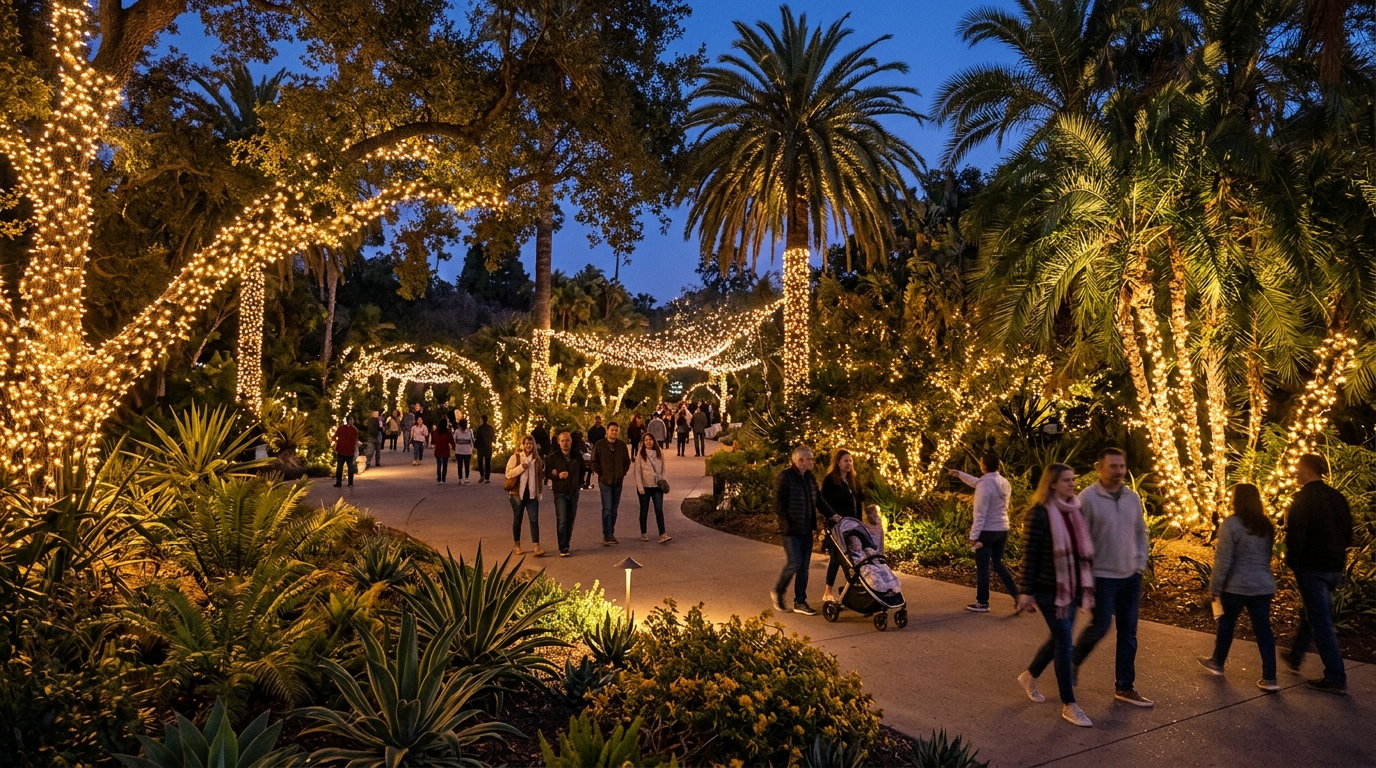
California holiday lights in 2026 offer a surprisingly wide range of experiences. You can stroll through an illuminated garden, watch sparkling boats in a harbor, explore a historic estate dressed for winter, or pair a city lights walk with dinner. The atmosphere is festive, but each option comes with different logistics, prices, crowds, and weather considerations.
The best holiday outing is not necessarily the largest display. It is the one that fits your group, your travel window, and the amount of time you want to spend outside. This guide helps you compare event styles, identify worthwhile regions, and build a pleasant trip without assuming that every attraction runs every evening.
What Makes California Holiday Lights Special in 2026
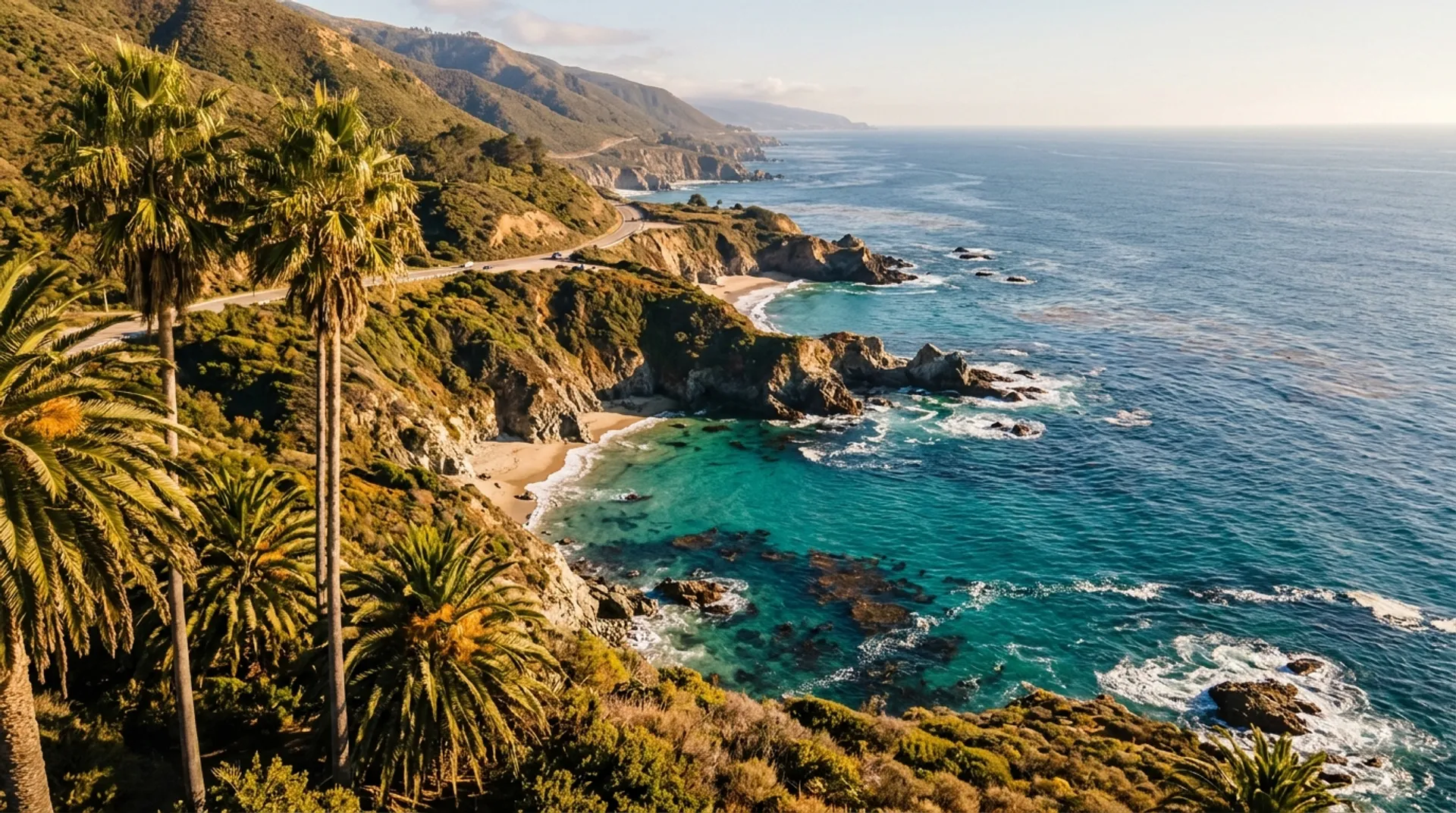
Unlike destinations where winter celebrations happen mostly indoors, many California events use gardens, coastlines, historic neighborhoods, desert landscapes, and waterfront spaces as their backdrop. Visit California’s 2026 holiday lights guide lists activities around the state, including seasonal displays that begin in November and continue into December or early 2027.
Because listings can change, use the state guide as inspiration and then visit each organizer’s website for exact operating dates, entry rules, prices, accessibility, and cancellation policies. A ticketed light walk, for instance, requires a different approach than a free neighborhood display that can be enjoyed at your own pace.
Northern California Gardens and City Lights
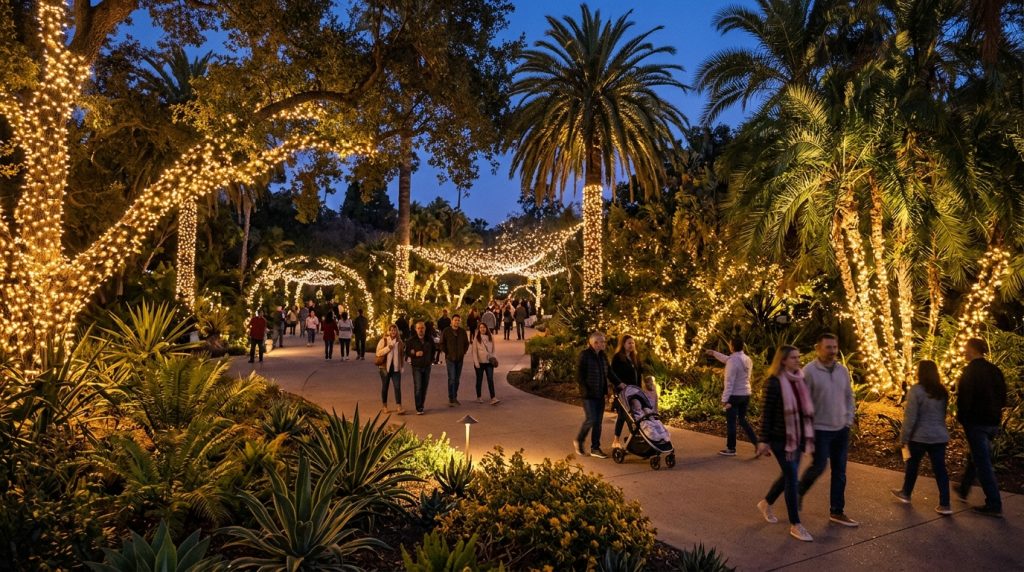
Woodside’s Filoli is among the established options for visitors who enjoy illuminated gardens and a historic setting. Its holiday programming is listed for a season that extends beyond December, although reservations and operating nights require direct confirmation. In the Bay Area, San Francisco’s light installations can also provide a more urban experience with cafés, restaurants, and transit nearby.
Farther north, the Mendocino Coast has offered botanical-garden light programming that combines a coastal getaway with an evening walk. Rather than attempting two distant attractions in one trip, pick a region and enjoy local dining as well. You will spend less time driving after dark and more time actually experiencing the event.
A city-based trip often works best when the light display is only one element of the evening. Arrive while local shops are still open, enjoy a relaxed meal, and walk to the installation once the sky darkens. In a garden setting, the sequence can be reversed: visit at your reserved time and find a nearby café afterward if the schedule allows. Either way, aim to eliminate unnecessary backtracking. If you are staying overnight, choosing accommodation within the same area can make the experience less rushed.
How to Choose a Garden Display
Check the walking distance, terrain, likely weather, and whether paths are suitable for your group. Garden events may involve timed entry, uneven surfaces, and limited lighting away from the display. Comfortable shoes and warm layers matter even when the afternoon felt mild. Bring only the equipment permitted by the organizer.
Consider booking earlier if a specific date is important. Tickets can sell out and weather policies differ; some events operate in light rain, while others change the program. Read the official terms before paying and avoid assuming your entry includes every attraction or food option on site.
City Lights Without the Parking Headache
If you choose a city display, decide where you will park or which transit stop you will use before leaving. Do not plan to circle busy blocks hoping for a curbside space right beside the installation. A short walk from a transit stop can be part of the experience, especially when nearby streets have decorations of their own.
Keep a second, quieter stop in mind in case the main area is crowded. A bakery or café, early dinner, or simple neighborhood walk can help the evening feel worthwhile even if you spend less time at the headline installation than expected.
Southern California Waterfront and Desert Celebrations
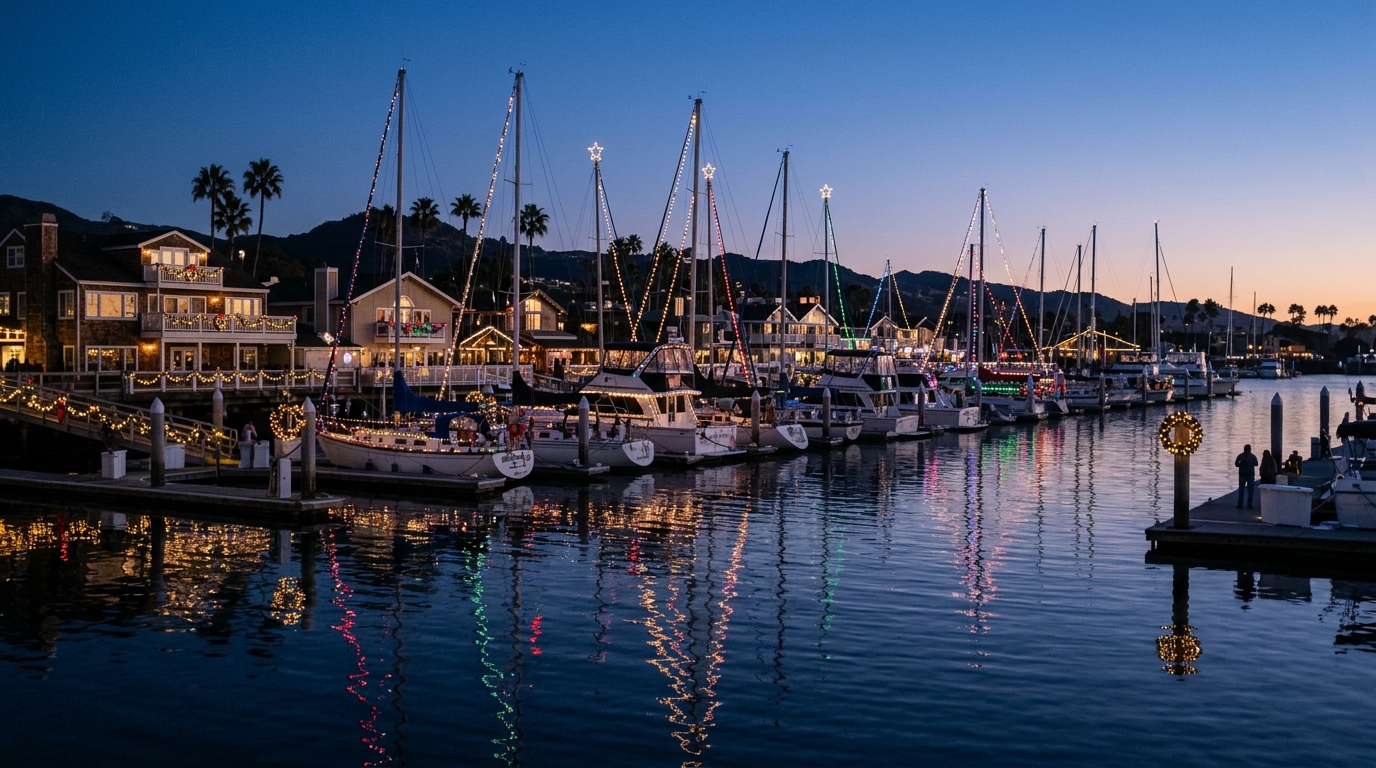
Southern California offers a different kind of holiday scenery. In coastal areas, boats and waterfront neighborhoods may carry lights across the water. Around Long Beach, seasonal decorations have traditionally appeared in bays and canals. Inland, Palm Desert and Palm Springs offer light-focused attractions against a desert backdrop, while San Diego has museum and garden programs.
There is no need to chase every city in one December trip. Start with the Cali Diaries experiences and events hub and select one region based on where you will sleep. If you are visiting with children, consider travel time after the show; if you prefer a quieter experience, look for weekday admission where it is offered.
Waterfront events are especially dependent on weather and crowd management. If a boat parade or harbor display is the main attraction, research the designated public viewing areas and avoid restricted docks or private property. In desert locations, evening temperatures may drop sharply even after a warm day. A light jacket and a confirmed return plan are easy details to overlook when planning from daytime photos. These choices help the evening remain comfortable for older relatives, children, and anyone who prefers not to stand outside for hours.
Build a Holiday Evening That Feels Festive, Not Exhausting
Good timing can matter as much as the event itself. An afternoon activity, early meal, and one evening display are often enough for a complete outing. Add travel buffers around sunset because roads and public transportation may be busy. Check whether entry times are strict and whether re-entry is allowed before making dinner reservations.
For inspiration beyond a single attraction, browse the California weekend plans collection. Keep the itinerary centered on one neighborhood or destination so the experience does not become a sequence of parking and pickup lines.
Food Stops That Make the Night More Memorable
Holiday travel is a good excuse to explore seasonal baking, warm drinks, and restaurants near the event. Look for a reliable dining option within a short distance instead of crossing town during peak evening traffic. If attending a ticketed display, eat first or confirm whether food vendors will operate during your admission slot.
A festive menu can be fun, but check dietary needs and prices directly with the restaurant. Some temporary vendors have limited selection, and queues can be long. Those small considerations can make the difference between a comfortable evening and one where everyone is tired before the lights begin.
Consider making dinner the flexible part of the plan rather than trying to reserve a crowded restaurant at the exact time the show ends. Eating earlier often gives you more control over the schedule. If you prefer a late meal, check whether kitchens will still be open, not just whether the restaurant doors remain unlocked. Seasonal food stands may run out of popular items near closing time, so do not count on a particular snack as your only dinner option. Planning modestly leaves space for spontaneous discoveries.
Plan for Children and Different Mobility Needs
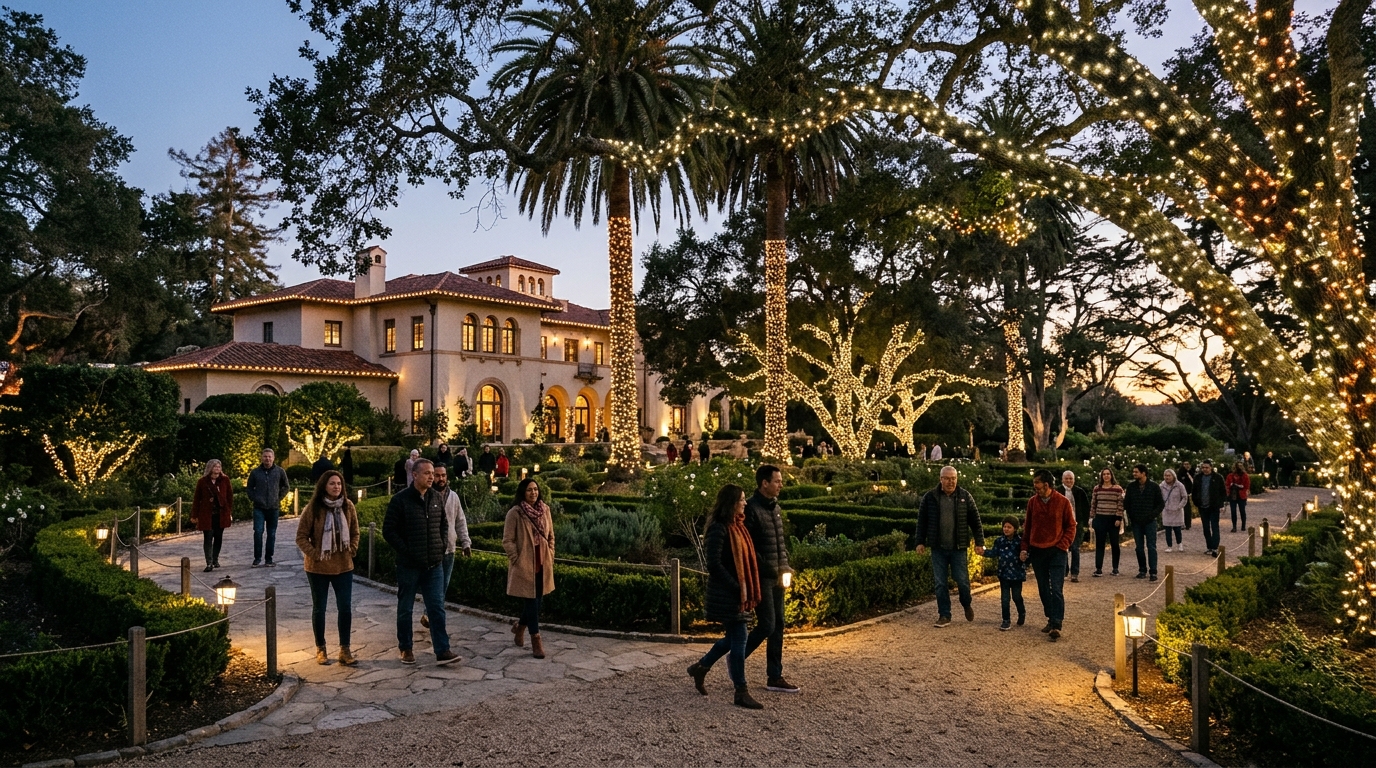
Before buying tickets, check stroller rules, accessible routes, rest areas, bathrooms, and the availability of seating. Not every historic property or garden path is evenly surfaced. An event that looks perfect in photographs may involve more walking than a family expects. Making an accessibility plan is easier before arriving than after the group is already in line.
For sensitive visitors, read whether the installation includes flashing lights, loud music, artificial snow effects, or crowded enclosed spaces. Bring layers, water, and a backup plan. You can still enjoy the festive spirit without staying to the very last scheduled moment.
Verify Dates Before Posting or Sharing Plans
Event schedules, admissions, and weather operations can change after an article is published. If you share a 2026 itinerary with friends, include the date you checked and link to the organizer. Never assume that a display will run on Thanksgiving, Christmas Day, or New Year’s Eve because it operates on nearby dates.
This matters for editorial recommendations too. A responsible guide identifies the experience but makes the official event page the final source for tickets and policies. The goal is to help people discover the event, not to create certainty about details that may shift.
California holiday lights in 2026 are best enjoyed with a little planning and plenty of room for surprise. Choose a display that suits your group, pair it with one enjoyable food stop, and confirm current admission details before leaving. You do not need a crowded schedule to create a memorable evening. For more ideas on local dining, see the food and restaurants collection.